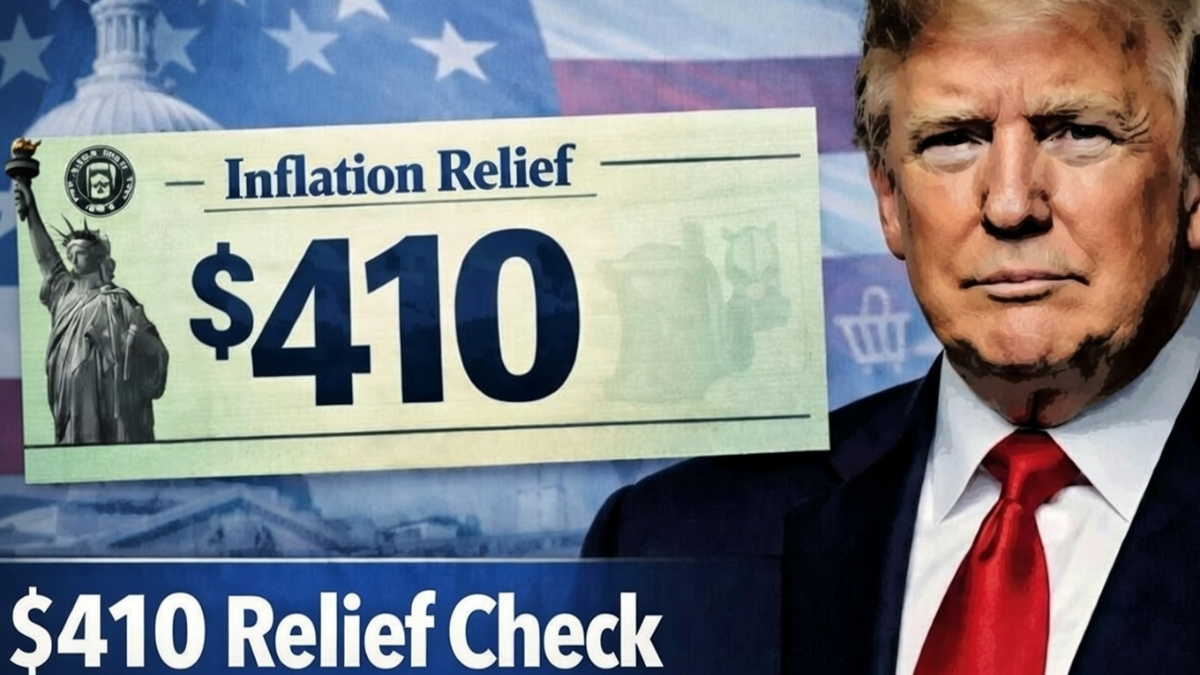
The idea of $410 inflation relief checks arriving in 2026 has spread rapidly across social media and search feeds, raising hopes for extra financial help as prices remain high. Many Americans want to know whether these payments are real, who would qualify, and when money could arrive. The truth is more complicated than the headlines suggest. Understanding what is confirmed, what is rumored, and how past relief programs worked is essential before expecting any payment.
What the $410 Inflation Relief Check Claim Is Based On
The $410 figure does not come from a single, nationwide federal program that has been officially announced. Instead, it appears to be a number circulating from a mix of state level relief proposals, past rebate programs, and estimated benefit calculations tied to inflation adjustments. In previous years, several states issued one time relief checks or rebates to help residents cope with rising living costs, and amounts varied widely.
At the federal level, there has been no formal announcement confirming a universal $410 inflation relief check for all Americans in 2026. Claims suggesting automatic payments to everyone should be treated cautiously until backed by official government communication.
Is the Federal Government Sending $410 Checks in 2026
As of now, there is no confirmed federal program guaranteeing $410 inflation relief checks to all eligible adults in 2026. Federal payments such as stimulus checks require legislation passed by Congress and signed into law. Without that step, no nationwide payment can be issued.
Any federal relief would be administered through agencies like the Internal Revenue Service for tax based rebates or the Social Security Administration for benefit related adjustments. Until these agencies release official guidance, reports of guaranteed checks remain speculative.
Who Might Be Eligible If Inflation Relief Is Approved
If inflation relief payments are approved in any form during 2026, eligibility would likely depend on income, filing status, or participation in existing benefit programs. Past relief efforts focused on low to moderate income households, seniors, Social Security recipients, and individuals receiving disability or assistance benefits.
Eligibility rules could vary widely depending on whether the relief is federal or state based. Some programs require recent tax filings, while others rely on benefit enrollment records. This means not everyone would automatically qualify, even if a payment program is introduced.
The Difference Between Inflation Relief Checks and COLA Increases
A major source of confusion is the difference between one time relief checks and Cost of Living Adjustments. COLA increases are permanent adjustments applied to benefits like Social Security and Supplemental Security Income to help offset inflation over time.
Relief checks, by contrast, are usually one time payments meant to provide short term assistance. A $410 check would fall into this category if approved. It would not increase monthly benefits and would not repeat unless a new program is passed.
Are States Issuing $410 Payments in 2026
Some of the $410 claims may be tied to state specific relief efforts. In recent years, several states issued inflation rebates, gas refunds, or surplus tax credits. These payments often ranged between a few hundred dollars and over one thousand dollars, depending on state budgets and eligibility rules.
Because state programs differ, a $410 payment could be real for residents of a particular state while being nonexistent elsewhere. This makes it critical to verify claims using official state government announcements rather than assuming a nationwide rollout.
How and When Payments Would Be Delivered
If any inflation relief checks are approved in 2026, payment methods would likely mirror past programs. Direct deposit would be used for individuals with banking information on file, while paper checks or prepaid cards could be sent to others.
Timing would depend entirely on legislative approval and administrative processing. No confirmed payment dates exist for a $410 relief check at this time. Any date circulating online should be considered unverified unless confirmed by official sources.
Common Misinformation to Watch Out For
False claims about guaranteed payments often spread during periods of economic uncertainty. Messages promising automatic deposits without applications, fixed payment dates, or universal eligibility are common red flags.
- Reliable information will always come from official government announcements, not viral posts, forwarded messages, or unofficial videos claiming inside details.
Staying cautious can help avoid disappointment and protect against scams targeting people expecting relief money.
What Americans Should Do Right Now
Instead of relying on unconfirmed claims, individuals should focus on verified benefits and programs already in place. Monitoring official updates from federal and state agencies ensures access to accurate information if new relief measures are approved.
Keeping tax filings current and benefit information updated also helps ensure eligibility for any future payments that may be tied to income or program participation.
Conclusion
The $410 USA inflation relief check for 2026 is not a confirmed nationwide payment at this time. While similar amounts have appeared in past state level programs and online discussions, no federal law guarantees such a check for all Americans. Any future relief will depend on legislative action and specific eligibility rules. Staying informed through official sources is the best way to separate fact from speculation and prepare for any genuine assistance that may become available.
Disclaimer: This article is for informational purposes only and does not constitute legal, financial, or government benefits advice.