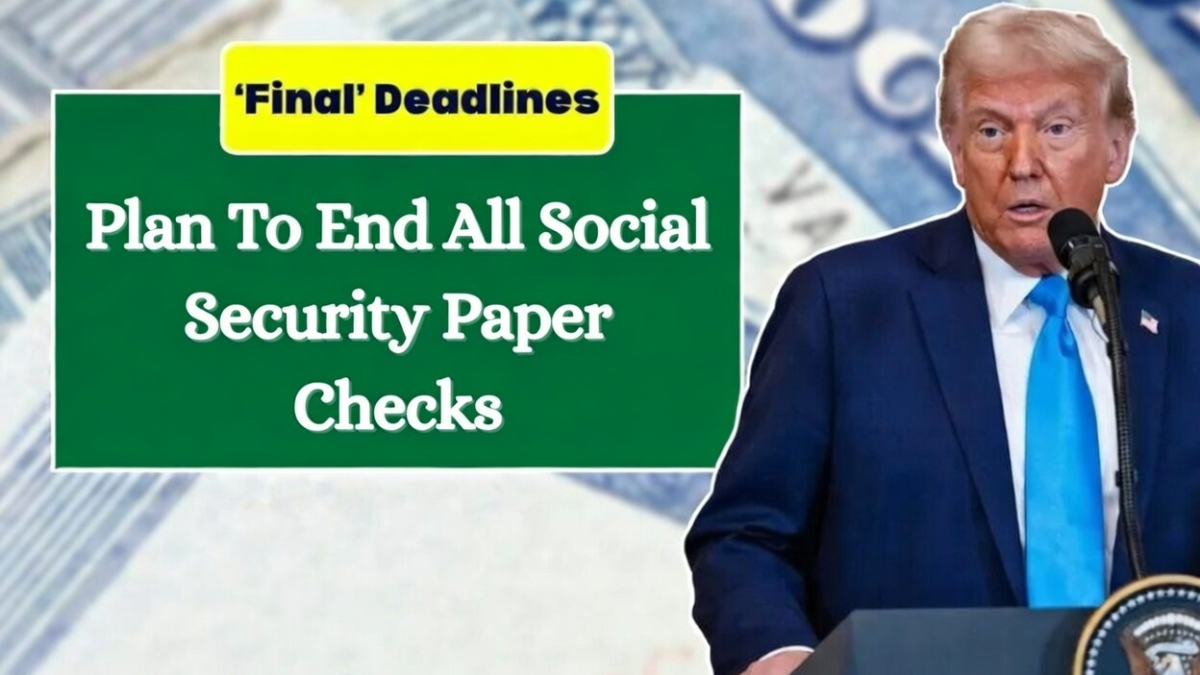
For weeks, Social Security recipients were told the clock was ticking. Official sounding notices, online discussions, and repeated deadline language suggested that paper checks were about to disappear for good. Millions of beneficiaries believed they would soon be forced into direct deposit or prepaid debit cards, with no exceptions. Now, without major announcements or headlines, the government appears to be quietly stepping back from plans to fully end Social Security paper checks.
This sudden change has left many wondering what actually happened, whether paper checks are still safe, and what beneficiaries should expect next.
What the Original Plan to End Paper Checks Looked Like
The push to eliminate paper checks was part of a long running effort to modernize federal payments. Digital payments are cheaper to process, faster to deliver, and less prone to theft or loss. Over the past decade, most federal benefits have already shifted to electronic delivery.
Earlier messaging made it seem like the remaining paper check recipients were facing a hard stop. Deadlines were described as final, and beneficiaries were urged to switch immediately to direct deposit or government issued debit cards to avoid payment disruption.
These messages were tied to policies overseen by agencies such as the Social Security Administration, working alongside the U.S. Treasury, which manages federal disbursements.
Why Paper Checks Still Matter to Millions
Despite the digital push, paper checks remain critical for a segment of Social Security recipients. Many are elderly, live in rural areas, lack reliable internet access, or are uncomfortable with banking systems. Others have had negative experiences with frozen accounts, fraud, or debit card issues.
For these individuals, paper checks are not a preference but a necessity. Eliminating them without workable alternatives risked delayed payments, confusion, and financial hardship for some of the most vulnerable beneficiaries.
Signs the Government Is Quietly Reversing Course
Instead of a clear announcement confirming the end of paper checks, recent communications have noticeably softened. Language emphasizing absolute deadlines has faded, and guidance now focuses more on encouraging voluntary electronic enrollment rather than enforcing mandatory conversion.
Some beneficiaries who missed supposed cutoff dates have continued receiving paper checks without interruption. Others report being told that exceptions and case by case accommodations remain available.
This shift suggests the government recognized the operational and political risks of enforcing a hard cutoff without adequate safeguards.
Why the “Final Deadline” Messaging Fell Apart
One reason the plan stalled is practical reality. Transitioning the last group of paper check recipients proved far more complex than anticipated. Many lacked required documents, bank access, or the ability to navigate enrollment systems.
Another factor is public pressure. Advocacy groups raised concerns about fraud risks, account seizures, and access barriers tied to electronic payments. For Social Security recipients, even a short disruption can have serious consequences.
Quietly easing enforcement allows agencies to avoid backlash while continuing long term modernization goals.
What This Means for Current Social Security Recipients
For now, Social Security paper checks are not disappearing overnight. Beneficiaries who still receive checks should not panic or assume payments will stop suddenly. At the same time, the government has not abandoned electronic payments as its preferred method.
Those who are able to switch to direct deposit may still be encouraged to do so. However, the absence of strict enforcement suggests flexibility remains, especially for individuals who genuinely cannot transition safely.
Electronic Payments Are Still the Long Term Goal
Even with this apparent retreat, the broader direction has not changed. Electronic delivery remains cheaper and more efficient for the government. Over time, pressure to move away from paper checks will likely continue.
The key difference now is pace. Rather than forcing immediate compliance, agencies appear to be slowing down, allowing more time for outreach, education, and accommodations.
Common Misunderstandings Beneficiaries Should Avoid
Some recipients believe that switching to electronic payments is mandatory right now. Others think paper checks are permanently protected. Neither assumption is fully accurate.
- Paper checks are still being issued, but electronic payments remain strongly encouraged, and future policy changes are still possible depending on administrative decisions.
Staying informed without overreacting is the safest approach.
What Beneficiaries Should Do Next
If you currently receive a paper check and it works reliably, there is no immediate action required based on current conditions. If you are considering switching, take time to understand account protections, fraud safeguards, and payment options.
Above all, rely on official communications rather than rumors or alarming social media posts. Major changes affecting Social Security payments are rarely implemented without multiple notices and transition periods.
Conclusion
After weeks of “final” deadline warnings, the government appears to be quietly stepping back from an aggressive push to end all Social Security paper checks. While electronic payments remain the preferred system, paper checks are still being issued, and enforcement has softened. For millions of beneficiaries, this pause offers breathing room and reassurance. The situation highlights the gap between policy intentions and real world impact, especially when changes affect vulnerable populations. Staying informed, calm, and cautious remains the best strategy as payment systems continue to evolve.
Disclaimer: This article is for informational purposes only and does not constitute legal or financial advice.