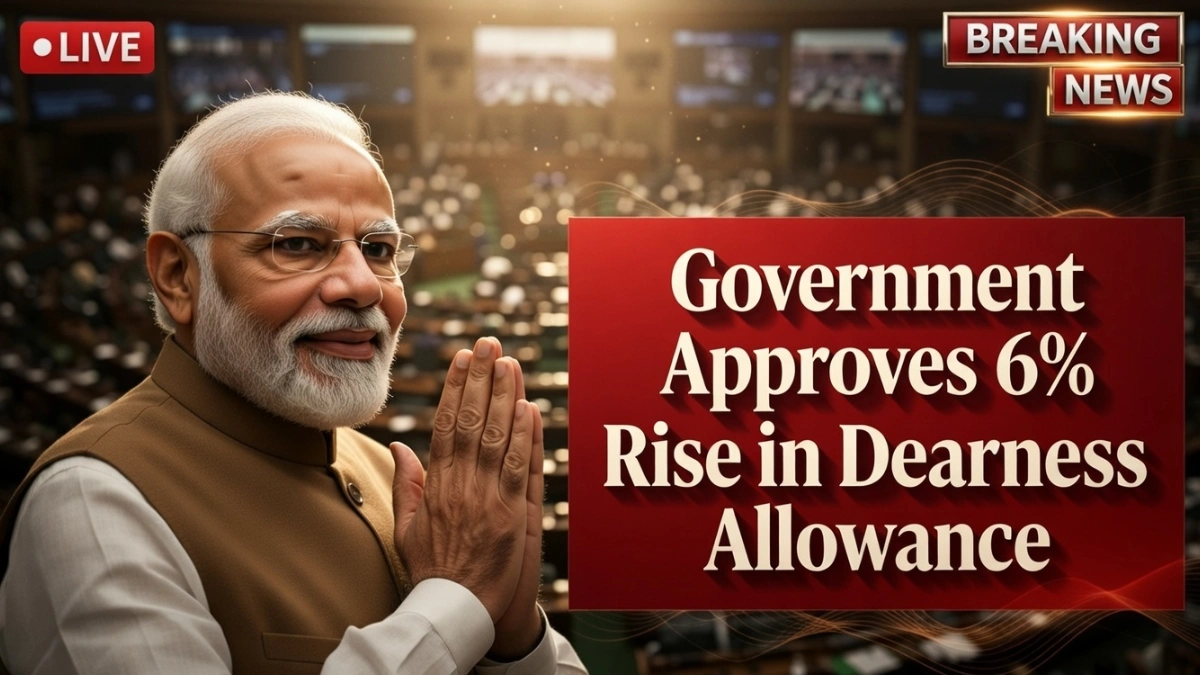
In 2026, the Government of India announced a significant increase in Dearness Allowance (DA) for government employees and pensioners. The 6 percent rise is aimed at helping staff cope with inflation and rising living costs. Dearness Allowance is a cost‑of‑living adjustment paid to central and state government workers, public sector employees, and pensioners. This revision offers financial relief and enhances disposable income for millions of families.
What the New DA Rate Means for Government Employees
The 6 percent increase means that the overall DA component, when added to existing salaries and pensions, will rise effectively, increasing monthly take‑home earnings. For employees in different pay levels, the actual impact will vary, but most beneficiaries will see a noticeable boost. This increase typically reflects periodic revisions tied to inflation metrics like the Consumer Price Index (CPI).
Applicable Categories Under the DA Revision
The revised DA applies to a wide range of beneficiaries including central government employees, state government staff under similar pay structures, public sector undertakings (PSU) employees following government norms, and eligible pensioners. Armed forces personnel and defense civilian employees may receive a corresponding adjustment based on defense ministry notifications.
Breakdown of DA Before and After the 6 % Increase
| Category | DA Before Increase | New DA Rate (2026) | Impact on Salary |
|---|---|---|---|
| Central Government Employees | 42 % | 48 % | Higher monthly earnings |
| State Government Employees | 40 % | 46 % | Increased disposable income |
| Pensioners | 42 % | 48 % | Better pension value |
| PSU Employees (Govt Pattern) | 42 % | 48 % | Enhanced cost‑of‑living support |
This table presents a simplified view of how the DA hike affects various groups by percentage and earnings.
Calculation of New DA Amounts
Dearness Allowance is calculated as a percentage of the Basic Pay. For example, if a central government employee has a Basic Pay of ₹30,000 per month, a rise from 42 % to 48 % DA would translate into an increase of ₹1,800 per month in the DA component alone. Pensioners will see a similar proportional rise in their monthly pension.
Financial Benefits and Economic Impact
The rise in DA boosts monthly income for employees and pensioners. It improves purchasing power and helps households manage essential expenses like food, education, health, and utilities. Economists note that such increases also have a positive ripple effect on overall consumption, supporting economic activity in local markets.
Conclusion
The 6 percent increase in Dearness Allowance in 2026 brings meaningful relief to government staff and pensioners across India. The adjustment supports employees in meeting rising costs of living while strengthening financial security. With increased take‑home earnings and pensions, families dependent on government income will experience practical benefits that help balance household budgets.
Disclaimer: This article is intended for general informational purposes only. The actual implementation of DA increases, calculation methods, and payout schedules may vary based on government notifications, state‑specific orders, and departmental directives. Readers should consult official government releases or payroll authorities for precise details.