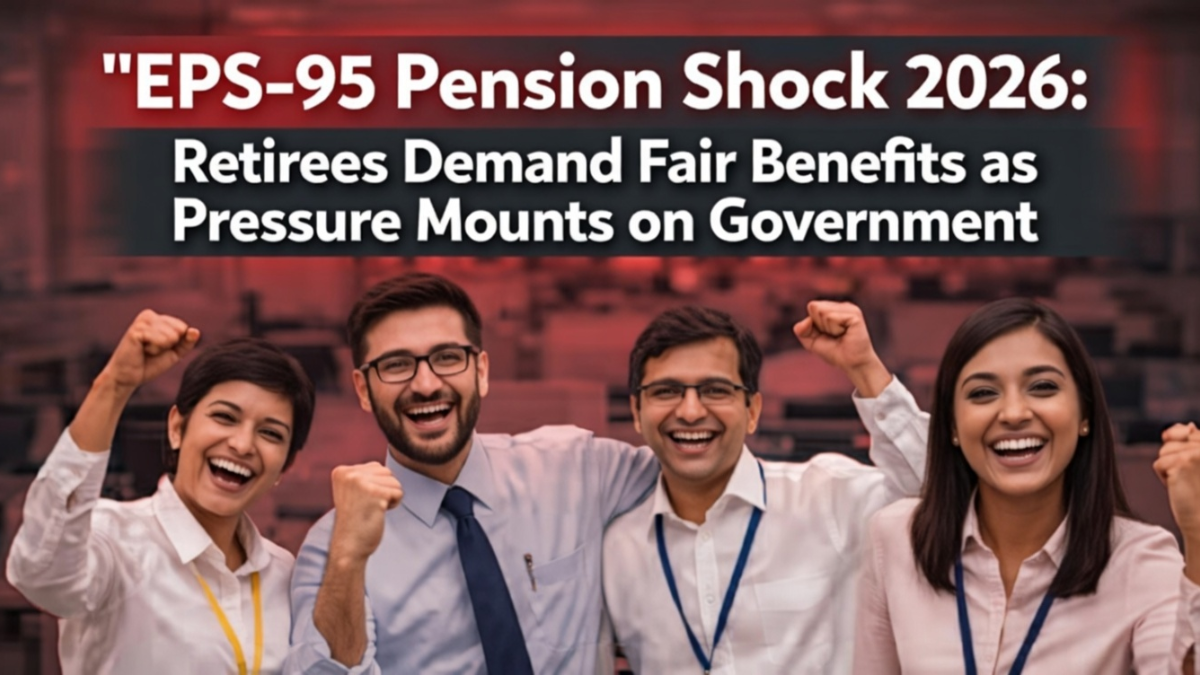
The EPS-95 pension debate has resurfaced strongly in 2026, with thousands of retirees across India demanding a fair and sustainable increase in monthly pension payments. For years, pensioners under the Employees’ Pension Scheme 1995 have argued that the current minimum pension is inadequate to meet rising living costs.
With inflation impacting essentials such as healthcare, food, and housing, the demand for reform is now louder than ever.
What Is EPS-95 and Why Is It Controversial?
The Employees’ Pension Scheme 1995 was introduced to provide retirement income to organized sector workers contributing through EPFO.
Currently, many pensioners receive a minimum pension of ₹1,000 per month. Retiree associations argue that this amount is outdated and insufficient, especially given the rising cost of living.
The controversy centers on whether the government should significantly revise the minimum pension amount and make it sustainable for the long term.
What Retirees Are Demanding in 2026
EPS-95 pensioners are pushing for:
A substantial increase in minimum monthly pension
Regular inflation-linked revisions
Improved healthcare support for senior citizens
Clear and transparent pension calculation rules
Several pensioner groups have organized meetings and representations urging authorities to address these concerns urgently.
Why Sustainability Is a Key Issue
While retirees demand higher payouts, policymakers must also consider financial sustainability.
Increasing pension amounts requires budget allocation and possible adjustments in contribution structures. Balancing adequate support for pensioners with long-term fund stability is a major policy challenge.
Experts suggest that reforms must ensure both improved benefits and fiscal responsibility.
Impact on Current and Future Pensioners
If the minimum pension is increased significantly in 2026, current retirees would see immediate financial relief.
Future retirees could also benefit from improved pension structures, but contribution formulas or eligibility criteria might be revised to maintain system balance.
Clarity on implementation timelines remains crucial.
Higher Pension Option and Legal Developments
In recent years, legal developments have allowed certain members to opt for higher pension based on actual salary contributions rather than capped wage limits.
This option has added another layer to the debate, as pensioners seek uniform and fair treatment under EPS-95 rules.
Administrative clarity and faster processing of higher pension cases are also part of ongoing discussions.
What Happens Next in 2026
Any major change to EPS-95 requires:
Formal government approval
Policy notification
EPFO administrative updates
Clear communication to beneficiaries
Until official announcements are made, pensioners are advised to rely only on verified updates from EPFO and government notifications.
Why This Debate Matters
For lakhs of retired workers, EPS-95 pension is their primary or only source of monthly income.
Ensuring fair and sustainable benefits is not only an economic issue but also a social security priority.
The outcome of the 2026 debate could redefine retirement income security for millions across India.
Conclusion
The EPS-95 pension debate in 2026 reflects growing concern among retirees about financial stability and dignity in retirement. While demands for higher minimum pensions continue, policymakers face the challenge of balancing fairness with sustainability.
As discussions evolve, pensioners should stay informed through official channels and prepare for possible reforms that could shape the future of retirement benefits.
Disclaimer: This article is for informational purposes only. Pension revisions and policy changes depend on official government decisions and EPFO notifications.